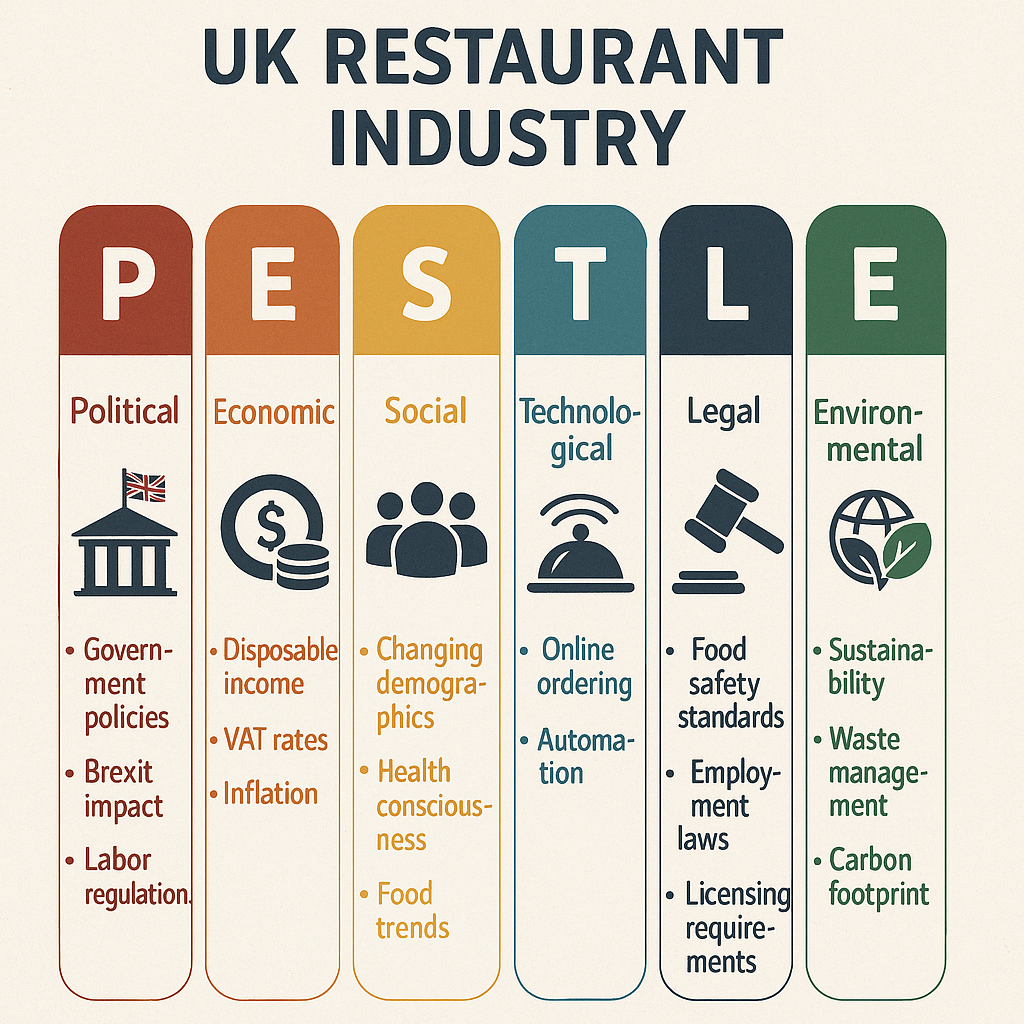
The UK restaurant industry is a vital part of the country’s economy and culture, encompassing a diverse range of establishments from fine dining and casual eateries to fast food chains and takeaways. As of recent years, the sector has faced significant transformation driven by changing consumer preferences, technological advancements, and external global events such as Brexit and the COVID-19 pandemic. Understanding the macro-environmental factors influencing this dynamic industry is crucial for businesses seeking to remain competitive and resilient.
A PESTEL analysis — which examines Political, Economic, Social, Technological, Environmental, and Legal factors — provides a comprehensive framework for evaluating the external forces impacting the UK restaurant industry. This analysis helps industry stakeholders identify potential opportunities and threats in the broader environment, shaping strategic decisions and operational planning.
Political Factors Affecting the UK Restaurant Industry
-
Regulatory Environment and Food Safety Standards
The UK government enforces strict food safety and hygiene regulations through agencies like the Food Standards Agency (FSA). Restaurants must comply with health inspections, labeling laws, and allergen disclosure requirements, which increase operational responsibilities and costs. -
Impact of Brexit
Brexit has significantly affected the industry by limiting the free movement of labor from the EU. Many restaurants have struggled with staff shortages due to reduced access to EU workers, especially in kitchens and front-of-house roles. -
Government Support and Taxation
Government policies such as VAT rates on food and alcohol, business rates, and corporation tax directly influence restaurant profitability. During the COVID-19 pandemic, measures like the furlough scheme and “Eat Out to Help Out” program showed how government intervention can temporarily support the industry. -
Trade and Import Regulations
Post-Brexit trade agreements have impacted the import of food and beverage products. Increased paperwork, border delays, and tariffs have affected supply chains and raised ingredient costs for restaurants that rely on imported goods. -
Public Health Policies
Policies aimed at tackling obesity and promoting healthy eating, such as mandatory calorie labeling and restrictions on high-fat, sugar, and salt (HFSS) foods, influence menu planning and marketing strategies for many restaurants.
Economic Factors Affecting the UK Restaurant Industry
-
Inflation and Rising Costs
The UK has experienced high inflation in recent years, leading to increased costs for ingredients, utilities, rent, and wages. These rising expenses have squeezed profit margins for restaurants and forced many to increase menu prices or cut costs. -
Consumer Spending Power
Economic uncertainty and cost-of-living pressures have affected consumers’ disposable income, influencing their willingness to dine out. Many people are opting for budget-friendly options or reducing the frequency of eating out, impacting restaurant revenues. -
Labour Market Conditions
Labour shortages, partly due to Brexit and the pandemic, have led to higher wages and competition for skilled staff. Recruiting and retaining talent has become more expensive and difficult, especially in front-of-house and kitchen roles. -
Interest Rates and Business Investment
The Bank of England’s interest rate decisions affect borrowing costs for businesses. Higher interest rates make it more expensive for restaurants to finance renovations, expansion, or other investments, slowing industry growth. -
Tourism and Hospitality Trends
Tourism is a major driver for many UK restaurants, especially in cities like London, Edinburgh, and Bath. Economic downturns or global events (like pandemics) that reduce tourism can directly harm restaurant revenues. -
Supply Chain Disruptions
Economic instability, both domestic and international, can lead to disruptions in supply chains. Delays, shortages, and price volatility in food imports affect menu offerings and operational consistency.
Social Factors Affecting the UK Restaurant Industry
-
Changing Consumer Preferences
UK consumers are increasingly seeking healthier, more sustainable, and ethically sourced food options. This shift has led many restaurants to adapt menus to include plant-based, low-calorie, and allergen-friendly choices to meet evolving demands. -
Rise of Convenience Culture
Busy lifestyles have boosted demand for fast, convenient dining options such as takeaway, food delivery apps, and grab-and-go meals. Restaurants have responded by partnering with platforms like Deliveroo, Uber Eats, and Just Eat. -
Growth of Veganism and Vegetarianism
A growing number of consumers in the UK are adopting vegetarian, vegan, or flexitarian diets. Restaurants are increasingly expected to offer diverse plant-based menu options to attract this expanding customer base. -
Cultural Diversity and Global Tastes
The UK’s multicultural population has fostered a strong demand for international cuisines, from Indian and Chinese to Middle Eastern and Mexican. This presents opportunities for restaurants to diversify their offerings and cater to a wide range of tastes. -
Social Media Influence
Platforms like Instagram, TikTok, and YouTube heavily influence dining decisions. Consumers are drawn to visually appealing dishes and trendy venues, making digital marketing and online presence crucial for restaurant success. -
Dining as a Social Experience
Eating out is not just about food — it’s also a social and leisure activity. Restaurants offering unique dining experiences, ambiance, and customer engagement often enjoy better brand loyalty and word-of-mouth promotion. -
Awareness of Ethical and Environmental Issues
Many customers now consider a restaurant’s environmental impact, treatment of animals, and labor practices. Establishments seen as ethical and eco-conscious are more likely to attract socially aware diners.
Technological Factors Affecting the UK Restaurant Industry
-
Online Ordering and Delivery Platforms
Technology has revolutionized the way people order food. Apps and platforms like Uber Eats, Deliveroo, and Just Eat allow customers to browse menus, place orders, and track deliveries in real time, expanding a restaurant’s customer base beyond physical foot traffic. -
Digital Payment Systems
Contactless and mobile payment options such as Apple Pay, Google Pay, and card readers are now standard. Customers expect fast, secure, and cashless transactions, which streamline service and improve customer experience. -
Restaurant Management Software
Many restaurants now use integrated Point-of-Sale (POS) systems, inventory tracking, staff scheduling tools, and customer relationship management (CRM) software to improve efficiency, reduce waste, and personalize customer interactions. -
Self-Service Kiosks and QR Code Menus
Especially post-pandemic, more venues have adopted contactless solutions such as self-order kiosks and QR code menus, which improve safety, reduce staffing needs, and enhance ordering accuracy. -
Data Analytics and Customer Insights
Restaurants are increasingly leveraging data to understand customer preferences, monitor sales trends, and optimize menu pricing. These insights help make more informed business decisions and target marketing efforts. -
Social Media and Digital Marketing Tools
Technology enables restaurants to market themselves through SEO, targeted ads, influencer partnerships, and social media campaigns. An effective online presence is crucial for attracting and retaining customers. -
Smart Kitchen and Automation Technology
Some restaurants are exploring AI-powered kitchen systems, robotic food prep, and smart appliances to enhance consistency, reduce labour dependence, and boost productivity, especially during staff shortages.
Legal Factors Affecting the UK Restaurant Industry
-
Food Safety and Hygiene Regulations
Restaurants in the UK are legally required to follow strict food hygiene laws under the Food Safety Act 1990 and enforced by the Food Standards Agency (FSA). Non-compliance can result in fines, closures, or legal action, making adherence essential for operations. -
Employment and Labour Laws
The industry must comply with laws regarding minimum wage, working hours, holiday entitlement, and health and safety under regulations like the Employment Rights Act 1996. The National Minimum Wage and National Living Wage increases also directly affect labour costs. -
Licensing Laws
Restaurants need specific licenses for alcohol sales, late-night opening, playing music, and food handling. Failure to obtain or comply with these can result in fines or license revocation. -
Allergen and Calorie Labeling
Legal requirements demand clear labeling of food allergens on menus (under Natasha’s Law) and mandatory calorie labeling for larger chains. These laws are in place to protect consumers and ensure transparency. -
Health and Safety Compliance
Under the Health and Safety at Work Act 1974, restaurants are responsible for the safety of their staff and customers. Risk assessments, staff training, and proper maintenance are legally required. -
Data Protection Laws
Restaurants using online ordering, customer databases, or digital marketing must comply with UK GDPR and Data Protection Act 2018 to safeguard customer data and avoid penalties. -
Environmental Regulations
Legal obligations around waste disposal, recycling, energy efficiency, and packaging (e.g., reducing single-use plastics) are becoming stricter, pushing restaurants to adopt more sustainable practices.
Environmental Factors Affecting the UK Restaurant Industry
-
Sustainability and Eco-Friendly Practices
Growing environmental awareness among consumers is pressuring restaurants to adopt sustainable practices. This includes sourcing local and organic ingredients, using eco-friendly packaging, and reducing water and energy consumption. -
Waste Management and Food Waste Reduction
Food waste is a major concern in the UK restaurant sector. Regulations and consumer expectations are driving businesses to implement waste reduction strategies such as portion control, composting, food donation, and recycling programs. -
Climate Change and Supply Chain Impact
Climate-related issues like extreme weather and crop failures can disrupt the supply chain, affect food availability, and drive up ingredient costs. Restaurants need to plan for sourcing alternatives and resilience in procurement. -
Plastic Reduction and Packaging Laws
UK laws now restrict the use of single-use plastics, such as plastic straws, stirrers, and cutlery. Restaurants are increasingly expected to switch to biodegradable or reusable packaging to reduce their environmental impact. -
Carbon Footprint and Emissions
Consumers and regulators are focusing more on carbon emissions. Restaurants are under pressure to reduce their carbon footprint by improving energy efficiency, minimizing transportation distances, and sourcing low-impact foods (e.g., plant-based options). -
Green Certifications and Eco Labels
Restaurants that achieve certifications such as the Sustainable Restaurant Association rating or display eco-labels can attract environmentally conscious diners and enhance their brand image. -
Regulatory Compliance
Compliance with environmental regulations—including those related to emissions, waste, and sustainability reporting—is becoming increasingly important and can influence operating licenses and public reputation.
Conclusion
The UK restaurant industry operates in a highly dynamic environment influenced by a complex mix of political, economic, social, technological, legal, and environmental factors. Political changes such as Brexit and regulatory shifts continue to reshape labour and trade landscapes. Economic pressures like inflation and changing consumer spending patterns affect profitability and demand. Social trends—including health consciousness, cultural diversity, and convenience—drive innovation in menus and service models. Technological advancements have transformed operations, marketing, and customer engagement, while strict legal compliance and growing environmental expectations demand responsible and sustainable business practices.
Understanding these external influences through a PESTEL framework enables restaurant owners and stakeholders to make informed strategic decisions, mitigate risks, and adapt to an evolving market. Staying proactive and responsive to these factors is crucial for long-term success and resilience in the UK’s competitive restaurant sector.


Leave a Reply