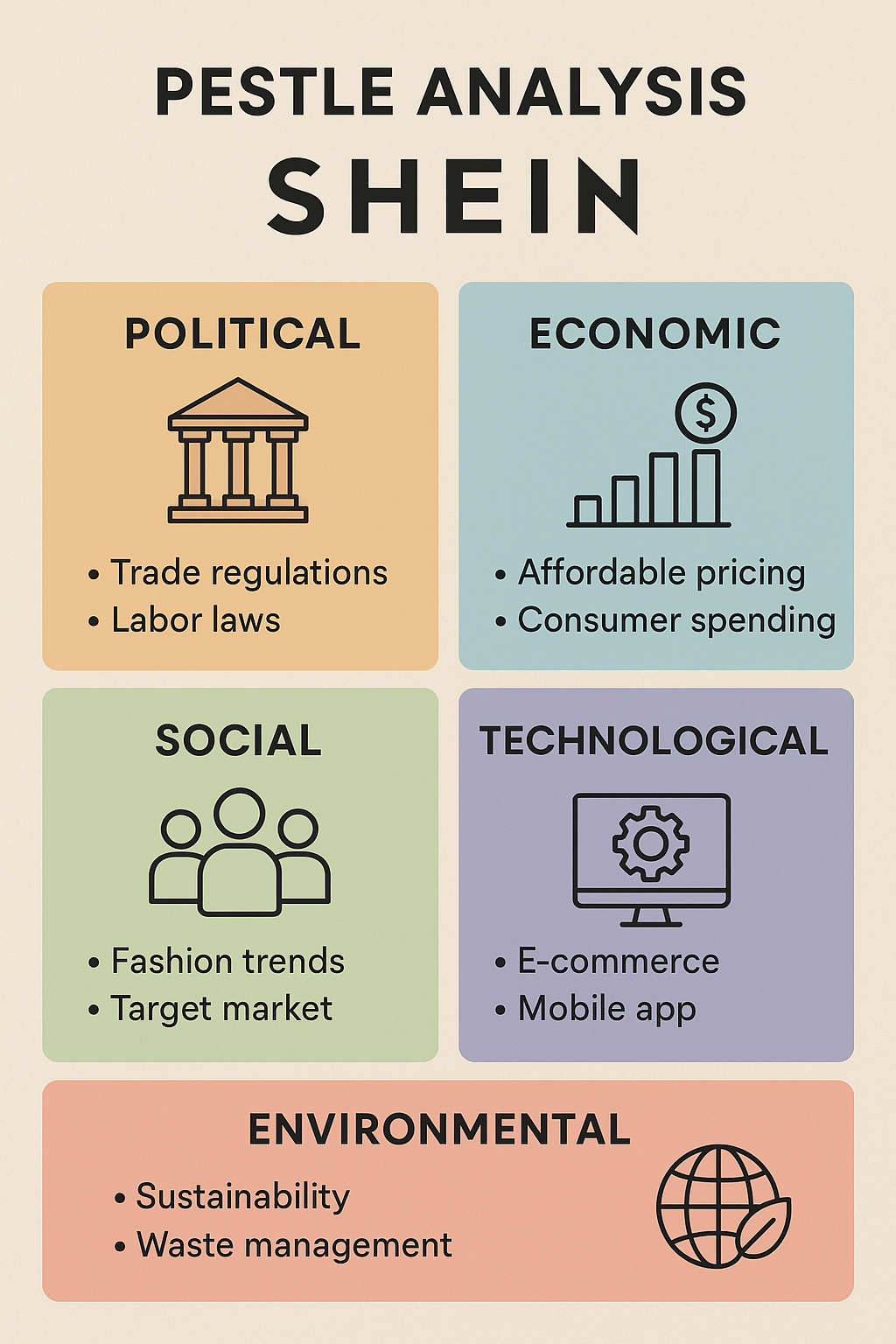
Shein, a leading global fast-fashion retailer, has gained significant popularity for its affordable pricing, trend-driven clothing, and online-first business model. Originating in China, the company has expanded rapidly across international markets, leveraging technology, supply chain efficiency, and social media influence to attract a young consumer base. However, its operations are influenced by a wide range of external factors, including government policies, global economic conditions, cultural trends, technological advancements, legal regulations, and environmental concerns. Conducting a PESTLE analysis of Shein helps to understand how these macro-environmental forces shape the company’s opportunities and challenges in the global fashion industry.
Political Factors Affecting Shein
-
Trade Policies and Tariffs
As a China-based company, Shein is directly affected by international trade relations and tariffs. Trade tensions between China and Western countries, particularly the United States and Europe, may increase import duties and raise the cost of goods. -
Government Regulations
Shein must comply with government rules regarding imports, exports, and retail operations in different markets. Any changes in e-commerce or retail policies in major markets can impact its supply chain and profitability. -
Geopolitical Tensions
Rising geopolitical issues, such as strained relations between China and other countries, can create uncertainty for Shein’s global expansion, potentially leading to restrictions or negative perceptions among consumers. -
Political Stability in Key Markets
Political stability in countries where Shein operates (e.g., the U.S., Europe, Middle East) plays a crucial role in ensuring smooth business operations. Instability could disrupt logistics and consumer demand. -
Government Pressure on Fast Fashion
Growing political pressure to regulate fast-fashion companies due to labor exploitation, product safety, and ethical concerns can lead to stricter policies that Shein must navigate to maintain its global presence.
Economic Factors Affecting Shein
-
Global Economic Conditions
Shein’s business performance is closely tied to global economic stability. In times of recession or inflation, consumers may cut back on discretionary spending, affecting demand for fashion products. Conversely, during economic growth, demand for affordable fast fashion tends to rise. -
Pricing Strategy and Affordability
Shein’s competitive edge lies in offering extremely low prices. This makes it attractive to cost-conscious consumers, especially during economic downturns, where customers prefer budget-friendly alternatives over luxury or premium brands. -
Currency Exchange Rates
As Shein operates globally, fluctuations in currency exchange rates can impact profitability. A strong U.S. dollar, for example, can affect revenues from international markets. -
Rising Production and Logistics Costs
Increasing fuel costs, raw material prices, and international shipping expenses may put pressure on Shein’s low-cost model, forcing the company to balance affordability with profitability. -
Unemployment and Disposable Income
High unemployment rates or reduced disposable income in key markets could negatively impact sales. On the other hand, affordable fashion demand may increase if consumers shift from expensive brands to budget-friendly retailers like Shein. -
Global E-Commerce Growth
The rise of online shopping and digital payment systems boosts Shein’s market opportunities, as more consumers in both developed and emerging economies turn to e-commerce for fashion purchases.
Social Factors Affecting Shein
-
Consumer Demand for Fast Fashion
Shein benefits from the growing appetite for trendy, affordable clothing, especially among younger generations who want frequent wardrobe changes without spending much. -
Social Media Influence
Platforms like TikTok, Instagram, and YouTube play a huge role in Shein’s popularity. User-generated content, influencer collaborations, and viral “Shein hauls” drive sales and increase brand visibility. -
Demographic Trends
Shein mainly appeals to Gen Z and Millennials, who prefer digital-first shopping experiences and are highly trend-driven. This young consumer base is crucial for the company’s rapid growth. -
Shifting Consumer Attitudes
While affordability and trends attract customers, there is growing criticism around sustainability, ethical labor, and overconsumption in fast fashion. Negative perceptions may damage Shein’s reputation in the long run. -
Cultural Preferences
Shein adapts its product offerings to different regions, considering cultural preferences and local fashion trends, which helps the brand maintain global relevance. -
Rise of Ethical Consumerism
Increasing awareness of environmental and labor issues has led some consumers to demand more transparency. This could pressure Shein to adopt and promote sustainable practices to retain socially conscious buyers.
Technological Factors Affecting Shein
-
Advanced Supply Chain Technology
Shein leverages real-time data analytics and automation to manage its supply chain efficiently. This enables the company to produce small batches quickly, test demand, and scale successful designs at speed. -
E-Commerce Platforms and Mobile Apps
The brand’s success heavily relies on its digital-first approach. Shein’s user-friendly website and mobile app attract millions of active shoppers globally, making technology central to its customer experience. -
Artificial Intelligence (AI) and Big Data
Shein uses AI algorithms to analyze browsing behavior, predict trends, and recommend products. This personalization boosts customer engagement and increases conversion rates. -
Digital Marketing and Social Media Tools
Shein’s marketing strategy thrives on social media algorithms, influencer partnerships, and viral campaigns, all supported by technology-driven analytics. -
Global Payment Systems
Technological advancements in secure online payment gateways and digital wallets make international transactions easier, allowing Shein to expand rapidly across borders. -
Logistics and Tracking Systems
Technology in shipping, warehousing, and order tracking improves delivery efficiency, giving customers transparency and enhancing trust in Shein’s global e-commerce operations. -
Innovation in Virtual Shopping
Emerging technologies such as augmented reality (AR) and virtual fitting rooms may further transform Shein’s online shopping experience, making it more interactive and reducing returns.
Legal Factors Affecting Shein
-
Intellectual Property (IP) Issues
Shein has faced multiple lawsuits over alleged design copying from independent designers and established brands. Stronger IP enforcement in key markets could increase legal challenges. -
Labor Laws and Worker Rights
The company has been criticized for poor working conditions and alleged labor exploitation in its supply chain. Stricter labor laws and audits in different countries could pressure Shein to improve compliance. -
Consumer Protection Regulations
Laws regarding product safety, quality, and return policies vary across countries. Shein must adhere to these to avoid penalties, product recalls, or loss of consumer trust. -
E-Commerce and Data Protection Laws
With its global operations, Shein must comply with international data privacy laws, such as the EU’s GDPR, regarding customer data collection and usage. Non-compliance could lead to heavy fines. -
Environmental Regulations
Many governments are introducing stricter rules on sustainability, waste management, and carbon emissions. As a fast-fashion retailer, Shein may face stricter compliance requirements to meet these standards. -
Import and Customs Laws
Different countries have varying rules on customs duties, import restrictions, and labeling requirements. Failure to comply can delay shipments or lead to legal disputes. -
Advertising and Marketing Regulations
Misleading advertisements, influencer disclosures, and ethical marketing practices are increasingly monitored by regulators. Shein must ensure its campaigns meet these legal standards.
Environmental Factors Affecting Shein
-
Sustainability Concerns
As a fast-fashion brand, Shein faces criticism for encouraging overconsumption and producing large amounts of textile waste. Growing environmental awareness pressures the company to adopt greener practices. -
Carbon Footprint and Emissions
Shein’s global supply chain involves large-scale manufacturing, international shipping, and packaging, all of which contribute to carbon emissions. Stricter climate policies could increase operational costs. -
Waste Management and Recycling
Most Shein products are made from synthetic fibers, which are difficult to recycle and harmful to the environment. Governments and consumers increasingly demand brands to adopt circular fashion practices, such as recycling programs. -
Water and Energy Usage
Textile production is resource-intensive, requiring significant amounts of water and energy. This raises environmental concerns, particularly in regions facing water scarcity or energy shortages. -
Eco-Friendly Fashion Trends
The rise of sustainable fashion and eco-conscious consumer behavior is a challenge for Shein’s fast-fashion model. Competitors promoting ethical sourcing and eco-friendly materials may gain an advantage. -
Regulatory Pressure on Pollution
Many countries are enforcing stricter regulations on pollution, waste disposal, and use of hazardous chemicals in textile production, requiring Shein to adapt its supply chain practices. -
Green Branding Opportunities
While facing criticism, Shein also has opportunities to improve its image by investing in sustainable fabrics, ethical sourcing, and eco-friendly packaging to attract environmentally conscious buyers.
Conclusion
The PESTLE analysis of Shein highlights how the company’s rapid global growth is shaped by a complex mix of external factors. Politically, trade policies and regulatory scrutiny influence its operations, while economically, affordability keeps it attractive during fluctuating market conditions. Socially, Shein benefits from social media-driven trends, yet faces criticism over sustainability and labor ethics. Technological advancements in AI, e-commerce, and logistics give the brand a competitive edge, but legal challenges around intellectual property, data protection, and labor rights pose significant risks. Finally, environmental concerns regarding waste, carbon emissions, and sustainable practices remain a major challenge as consumer demand for eco-friendly fashion increases. Overall, while Shein continues to dominate the fast-fashion market with its affordability and digital strategies, addressing legal, ethical, and environmental concerns will be crucial for its long-term success and global reputation.


Leave a Reply