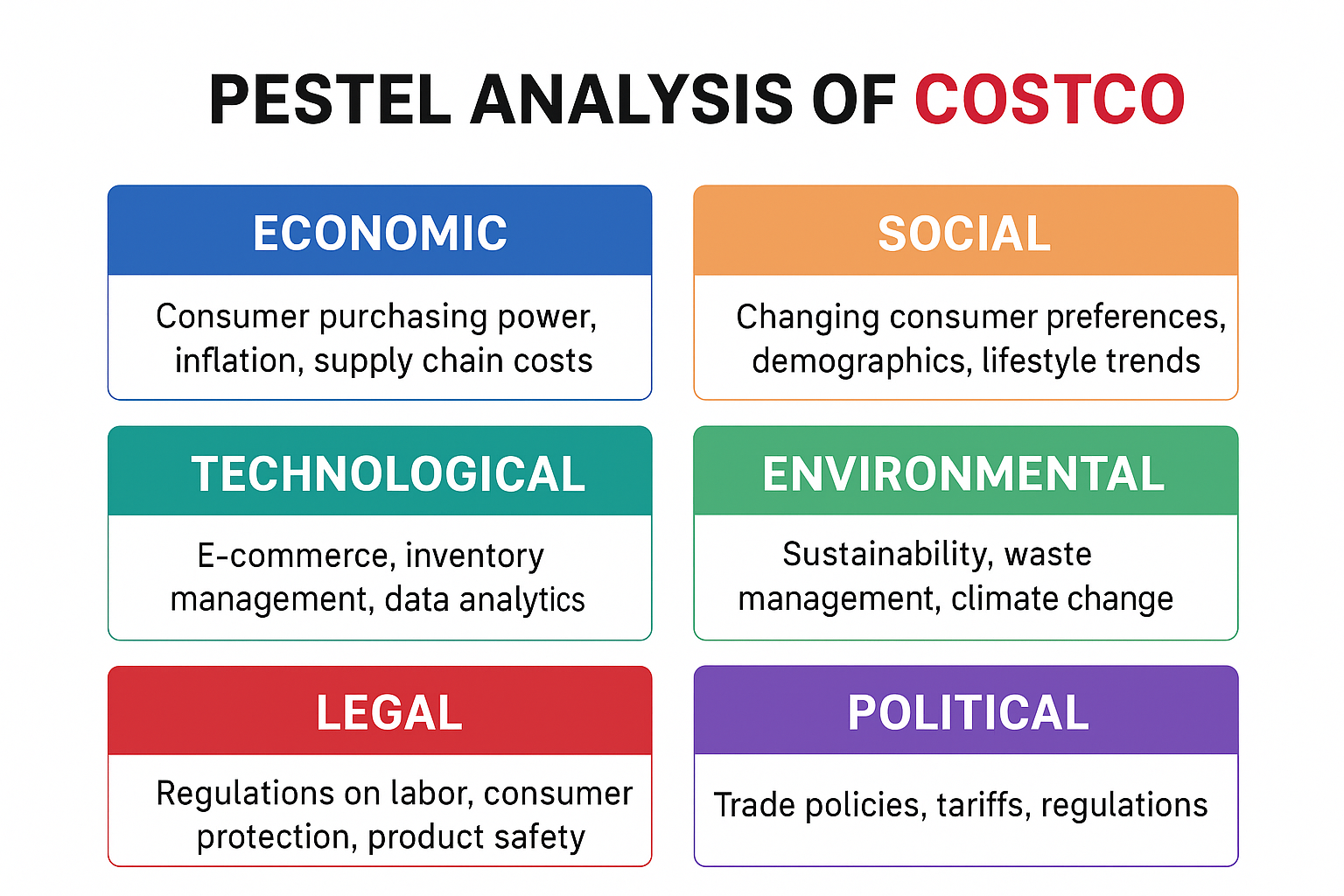
Costco Wholesale Corporation, one of the world’s largest retail chains, operates on a unique membership-based warehouse model that sets it apart in the global retail industry. Conducting a PESTLE analysis of Costco helps examine the external macro-environmental factors—Political, Economic, Social, Technological, Legal, and Environmental—that influence its operations, growth strategies, and overall competitive position. By understanding these external drivers, businesses and analysts can better assess Costco’s market stability, potential risks, and long-term opportunities within the highly competitive retail landscape.
Political Factors Affecting Costco
Political factors play a crucial role in shaping Costco’s operational environment, supply chain efficiency, and long-term growth strategies. As a multinational retail giant operating in the United States, Canada, Europe, and parts of Asia, Costco must navigate various government policies, trade regulations, labor laws, and international political dynamics. These political forces can either support its expansion or create operational challenges.
1. Government Regulations and Retail Policies
Costco’s operations are heavily influenced by national and regional regulations governing retail trade. Governments often enforce rules regarding product labeling, consumer safety, food handling, and pricing transparency. Compliance with these regulations is essential to maintaining Costco’s reputation as a trusted retailer. Any changes in retail legislation—such as restrictions on bulk sales, regulations on organic certification, or changes in duty-free imports—can directly affect Costco’s business model.
2. Trade Policies and Tariffs
Because Costco sources goods from multiple countries, international trade policies significantly impact its supply chain. Tariffs on imported goods, changes in trade agreements, and customs regulations can influence the pricing and availability of merchandise. For example, trade tensions between major economies like the U.S. and China can increase the cost of imported products, affecting Costco’s ability to offer low prices.
3. Political Stability and Market Confidence
Costco primarily operates in politically stable countries, which supports predictable business operations. Stable governments foster investor confidence and help Costco expand smoothly. However, political uncertainty or sudden policy shifts in international markets could create disruptions in logistics, labor markets, and import/export procedures.
4. Labor Laws and Employment Regulations
Government policies related to wages, working hours, and employee benefits have a major impact on Costco. The company is known for offering competitive wages, but minimum wage hikes or changes in employment regulations in different states or countries may increase operating costs. Costco must remain compliant with labor standards related to employee safety, unionization rights, and workplace equality.
5. Taxation Policies
Corporate tax rates and tax reforms directly affect Costco’s profitability. Changes in sales tax, value-added tax (VAT), or corporate income tax can influence pricing strategies and consumer demand. Favorable tax policies may support expansion, while higher taxes could increase costs for both the company and its customers.
6. Government Support for Infrastructure
Efficient transportation systems, energy resources, and digital infrastructure are essential for Costco’s warehouse operations. Government investment in roads, ports, and logistics can improve supply chain efficiency. Conversely, inadequate infrastructure in emerging markets can delay Costco’s expansion plans.
7. International Trade Relations and Geopolitical Issues
Geopolitical tensions, sanctions, or diplomatic conflicts can pose risks to Costco’s global supply chain. For example, disruptions in major shipping routes or restrictions on sourcing from certain countries could lead to shortages or increased costs. Costco must continuously adapt its sourcing strategies to mitigate geopolitical risks.
Economic Factors of Costco
Costco Wholesale Corporation operates in the retail sector, specifically focusing on warehouse club memberships, which means its economic environment plays a crucial role in shaping its performance and strategy. Several key economic factors influence Costco’s business:
1. Consumer Purchasing Power and Income Levels
Costco’s business model relies heavily on customers’ disposable income and overall purchasing power. In times of economic growth, consumers tend to spend more, especially on bulk purchases and higher-value items, which benefits Costco. Conversely, during economic downturns or recessions, customers may reduce discretionary spending but still turn to Costco for cost savings and value, which can mitigate negative impacts.
2. Inflation and Price Sensitivity
Inflation affects the prices of goods Costco sells, including groceries, electronics, and household items. While Costco’s bulk buying model allows it to negotiate better prices and maintain lower costs, rising inflation pressures operational costs and product pricing. Costco needs to balance these pressures to maintain customer loyalty by offering competitive prices without severely impacting profit margins.
3. Cost of Goods and Supply Chain Costs
Economic factors such as changes in commodity prices, transportation costs, and tariffs directly impact Costco’s cost of goods sold. Fluctuations in fuel prices, labor costs, and international trade policies can increase expenses in the supply chain, affecting pricing strategies and profitability.
4. Employment and Wage Levels
Costco’s workforce size and wage policies are influenced by the broader economic environment. Labor market conditions, minimum wage laws, and inflation-driven wage expectations impact operating expenses. Costco is known for paying competitive wages, which helps in employee retention but also increases operating costs during inflationary periods.
5. Interest Rates and Consumer Credit
Interest rate changes influence consumer borrowing costs and overall economic activity. Higher interest rates can reduce consumer spending on credit, affecting sales of higher-ticket items at Costco. Conversely, lower rates encourage spending and investment, potentially increasing Costco’s sales volumes.
6. Economic Cycles and Market Conditions
Costco’s performance is affected by overall economic cycles, including expansions and recessions. During economic expansions, increased consumer confidence boosts sales, while recessions often lead to more cautious spending. Costco’s value proposition as a low-cost retailer often helps it sustain sales better than traditional retailers during downturns.
7. Currency Exchange Rates
As Costco operates internationally (Canada, Mexico, UK, and others), fluctuations in currency exchange rates impact revenues, costs, and profitability. A strong U.S. dollar can make imported goods cheaper but reduce the value of foreign earnings when converted back to USD.
Social Factors of Costco
Costco Wholesale Corporation operates in a retail environment where social trends and consumer behaviors significantly impact its business strategy and performance. Understanding these social factors helps Costco tailor its offerings and customer experience.
1. Changing Consumer Preferences
Consumers today increasingly prioritize value, quality, and convenience. Costco’s bulk-buying warehouse model appeals to shoppers looking for cost savings and efficiency in one-stop shopping. Additionally, there is growing demand for organic, healthy, and sustainable products, which Costco has responded to by expanding its selection of organic foods and eco-friendly items.
2. Demographic Shifts
Population demographics influence Costco’s target market and product offerings. The company caters to a broad age range, from young families seeking bulk groceries to retirees purchasing household goods. As populations age in many developed markets, Costco adapts by offering products suited for older consumers, including health-related products and accessible shopping experiences.
3. Cultural Trends and Lifestyle Changes
Lifestyle changes, such as increased health consciousness and environmental awareness, shape consumer buying habits. Costco’s growing assortment of healthy foods, wellness products, and environmentally sustainable goods reflects this trend. Moreover, as more people focus on work-life balance and convenience, Costco’s easy-to-navigate warehouse model and membership benefits align well with these lifestyle shifts.
4. Community Engagement and Corporate Social Responsibility (CSR)
Consumers increasingly expect companies to contribute positively to their communities and the environment. Costco actively engages in CSR activities, including charitable giving, supporting local communities, and sustainable sourcing practices. This strengthens customer loyalty and improves the brand’s reputation.
5. Social Media and Word of Mouth
Social media platforms influence consumer behavior and brand perception. Costco benefits from positive word-of-mouth due to its reputation for quality products and customer service. The company uses social media to engage with customers, announce promotions, and gather feedback, helping it stay connected to evolving consumer preferences.
6. Membership Culture
Costco’s membership model fosters a sense of exclusivity and community among shoppers. This social factor encourages customer loyalty, repeat visits, and a higher likelihood of bulk purchasing. The membership also creates a social contract of trust, where customers expect quality products at reasonable prices.
7. Urbanization and Shopping Habits
Increasing urbanization impacts shopping behavior, with more consumers looking for convenient and efficient shopping experiences. While Costco traditionally targets suburban areas with large warehouse stores, it has started exploring smaller-format stores in urban locations to adapt to these social changes.
Technology Factors of Costco
In today’s fast-evolving retail landscape, technology plays a crucial role in shaping Costco’s operations, customer experience, and competitive advantage. Here are the key technology factors impacting Costco:
1. E-commerce and Online Shopping Platforms
The rise of e-commerce has transformed retail globally. Costco has developed and expanded its online shopping platform to meet growing consumer demand for convenient digital purchases. Although traditionally focused on physical warehouse stores, Costco’s investment in its website and mobile app allows it to compete with major online retailers, providing members with options for home delivery or in-store pickup.
2. Inventory Management and Automation
Advanced inventory management systems help Costco maintain efficient stock levels and reduce costs. The use of technologies like RFID (Radio Frequency Identification) and data analytics enables real-time tracking of inventory, minimizing stockouts and overstock situations. Automation in warehouses and supply chain logistics improves speed and accuracy in order fulfillment.
3. Data Analytics and Customer Insights
Costco leverages big data and analytics to understand customer buying patterns, preferences, and trends. By analyzing membership data and purchase histories, Costco can optimize product assortments, personalize marketing efforts, and improve customer retention. This data-driven approach supports better decision-making across the business.
4. Supply Chain Technology
The integration of advanced supply chain technologies, such as blockchain for transparency and AI for demand forecasting, enhances Costco’s ability to streamline procurement and distribution. Efficient supply chains reduce costs and ensure fresh and timely product availability, especially critical in food and perishables.
5. Payment Technologies
Costco adopts secure and convenient payment technologies to enhance the checkout experience. This includes contactless payments, mobile wallets, and Costco’s own co-branded credit cards that offer member benefits and rewards. Secure payment systems are essential to maintaining customer trust and satisfaction.
6. Cybersecurity
With growing digital operations, cybersecurity is vital for protecting customer data, payment information, and corporate systems. Costco invests in robust cybersecurity measures to safeguard against data breaches and cyber threats, ensuring compliance with privacy regulations and maintaining customer confidence.
7. In-Store Technology Enhancements
Costco incorporates technology to improve the in-store experience, such as digital price tags, self-checkout kiosks, and mobile scanning options. These technologies reduce wait times and improve convenience, helping Costco keep pace with consumer expectations.
Environmental Factors of Costco
Environmental concerns and sustainability have become increasingly important in the retail industry. Costco, as a major global retailer, faces several environmental factors that influence its operations, reputation, and long-term strategy.
1. Sustainability and Eco-Friendly Practices
Consumers and regulatory bodies increasingly expect companies to adopt sustainable business practices. Costco has made efforts to incorporate eco-friendly initiatives, such as sourcing products responsibly, reducing packaging waste, and promoting recyclable materials. These efforts help reduce environmental impact and appeal to environmentally conscious customers.
2. Energy Consumption and Efficiency
Operating large warehouse stores requires significant energy usage. Costco is focusing on improving energy efficiency through initiatives such as LED lighting, energy-efficient HVAC systems, and solar power installations at some locations. Reducing energy consumption lowers operational costs and aligns with global sustainability goals.
3. Waste Management and Recycling
Costco faces challenges in managing waste generated from packaging, unsold products, and store operations. The company implements waste reduction programs, including recycling cardboard, plastics, and food waste diversion through donations or composting, helping reduce landfill impact.
4. Climate Change and Carbon Footprint
Climate change poses risks such as supply chain disruptions, increased operational costs, and regulatory pressures. Costco monitors and manages its carbon footprint by optimizing transportation routes, investing in fuel-efficient fleets, and exploring renewable energy sources to reduce greenhouse gas emissions.
5. Water Usage and Conservation
Water conservation is an important environmental consideration, especially in regions facing water scarcity. Costco works on reducing water usage in its stores and distribution centers by installing water-efficient fixtures and promoting water conservation practices.
6. Regulatory Compliance and Environmental Standards
Costco must comply with environmental regulations in all countries it operates. This includes waste disposal laws, emissions standards, and product safety regulations. Adhering to these laws minimizes legal risks and enhances the company’s reputation.
7. Consumer Demand for Green Products
There is growing consumer demand for environmentally friendly products such as organic foods, sustainably sourced seafood, and products with minimal environmental impact. Costco responds by expanding its range of green products and partnering with suppliers who meet sustainability criteria.
Legal Factors of Costco
Costco Wholesale Corporation operates in multiple countries and must navigate a complex legal landscape that impacts its business operations, compliance, and risk management. Key legal factors influencing Costco include:
1. Employment and Labor Laws
Costco must comply with labor laws regarding wages, working hours, workplace safety, and employee rights in each country it operates. This includes minimum wage regulations, anti-discrimination laws, and health and safety standards. Failure to comply can lead to legal penalties, lawsuits, and damage to reputation.
2. Consumer Protection Laws
Laws protecting consumers affect how Costco markets and sells its products. These laws regulate product labeling, advertising claims, return policies, and warranties. Costco must ensure transparency and honesty to avoid legal challenges and maintain customer trust.
3. Product Safety and Liability
Costco is legally responsible for ensuring the safety of the products it sells. This involves compliance with safety standards, recalls of defective products, and managing liability claims related to product defects or injuries. Rigorous quality control and supplier vetting are essential to mitigate risks.
4. Competition and Antitrust Regulations
Costco must adhere to antitrust laws designed to prevent monopolistic practices and promote fair competition. These laws affect pricing strategies, mergers and acquisitions, and supplier agreements. Regulatory scrutiny can impact Costco’s expansion plans or business practices.
5. Intellectual Property Laws
Protecting its trademarks, brand, and proprietary processes is important for Costco. The company also must respect intellectual property rights of suppliers and partners. Legal issues in this area could include counterfeit products or infringement disputes.
6. Environmental Regulations
Costco must comply with environmental laws related to waste management, emissions, packaging, and sustainability reporting. Non-compliance could result in fines, sanctions, or restrictions on operations, particularly in jurisdictions with strict environmental policies.
7. Data Privacy and Cybersecurity Laws
With increasing digital operations, Costco is subject to data protection regulations like GDPR in Europe and CCPA in California. These laws govern how customer and employee data is collected, stored, and used. Compliance is critical to avoid hefty fines and protect customer trust.
8. International Trade and Tariff Regulations
Costco’s global supply chain is influenced by international trade laws, tariffs, and customs regulations. Changes in trade policies, import/export restrictions, or tariffs can affect product costs, availability, and supply chain efficiency.
Conclusion of Costco’s PESTLE Analysis
Costco operates in a dynamic environment shaped by various external factors that influence its business strategy and performance. Economically, Costco benefits from consumer demand for value and bulk purchasing, though it must navigate inflation, supply chain costs, and economic cycles. Socially, changing consumer preferences toward health, sustainability, and convenience align well with Costco’s product offerings and membership model, fostering strong customer loyalty.
Technological advancements play a critical role in enhancing Costco’s efficiency and customer experience through e-commerce, data analytics, and supply chain innovations. Environmentally, Costco is increasingly adopting sustainable practices to reduce its carbon footprint, manage waste, and meet consumer expectations for eco-friendly products, all while complying with regulatory demands.
Legally, Costco faces complex challenges across labor laws, consumer protection, product safety, and data privacy, requiring robust compliance efforts to avoid risks and protect its reputation. Additionally, international trade regulations and antitrust laws impact Costco’s global operations and expansion plans.
Overall, Costco’s ability to adapt to these economic, social, technological, environmental, and legal factors is essential to maintaining its competitive advantage and continuing its growth in the global retail market. Its focus on value, customer experience, sustainability, and compliance positions it well to navigate future challenges and opportunities.


Leave a Reply